Focusrite Scarlett Solo (4th Gen) vs Focusrite Scarlett 2i2 (3rd Gen)
Focusrite Scarlett Solo 4th Gen vs Scarlett 2i2 3rd Gen: Get the Focusrite Scarlett Solo (4th Gen), narrowly. The Focusrite Scarlett Solo (4th Gen) wins...
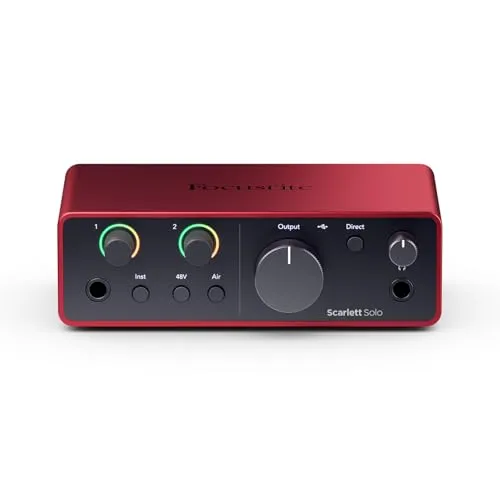
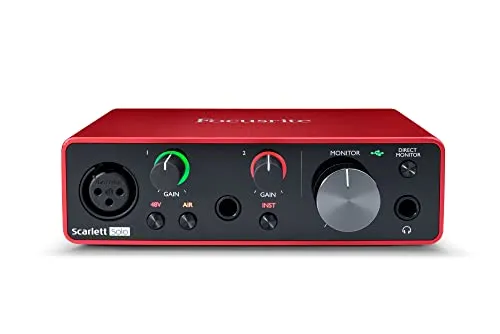
The Ruling
Focusrite Scarlett Solo (4th Gen) or Focusrite Scarlett 2i2 (3rd Gen)? Get the Focusrite Scarlett Solo (4th Gen), narrowly.
The Focusrite Scarlett Solo (4th Gen) wins Preamps and Creator Features — but only just, and the rest of the chart is close. It is the pricier of the two at $159.99, so the Focusrite Scarlett 2i2 (3rd Gen) stays the pick if $10 matters more than those specs.
Unless…
- You need mic inputs — get the Focusrite Scarlett 2i2 (3rd Gen).
At a Glance
Where each one actually leads
Every axis is scored out of 10 from the catalog specs below. The scores are relative to the products on this page, so a 10 means “best of these”, not “perfect”, and two identical columns mean the catalog genuinely cannot separate them. Axes the catalog holds no figure for on both sides are left off entirely rather than guessed at.
| Category | Focusrite Scarlett Solo (4th Gen) | Focusrite Scarlett 2i2 (3rd Gen) |
|---|---|---|
| Audio Resolution | 10/10 | 10/10 |
| Preamps | 10/10 | 8.1/10 |
| Mic Inputs | 5/10 | 10/10 |
| Monitoring | 10/10 | 10/10 |
| Creator Features | 10/10 | 5/10 |
| Connectivity | 10/10 | 10/10 |
The Split
What each one wins
Focusrite Scarlett Solo (4th Gen)
Compact 1-mic USB-C interface for solo creators who need clean voice and instrument input.
On paper the Focusrite Scarlett Solo (4th Gen) takes loopback (Yes), dynamic range (120dB, +9dB) and preamp gain (57dB, +1dB). It gives up XLR inputs to the Focusrite Scarlett 2i2 (3rd Gen). That costs $10.00 more than the Focusrite Scarlett 2i2 (3rd Gen).
Leads on
-
LoopbackYesNo
Loopback routes computer audio back into the stream without a second interface or cable.
-
Dynamic Range +9dB120dB111dB
Wider converter dynamic range means less noise between the quietest and loudest parts of a take.
-
Preamp Gain +1dB57dB56dB
More gain drives quiet dynamic microphones like the SM7B without a separate booster.
Focusrite Scarlett 2i2 (3rd Gen)
Popular 2-in/2-out USB audio interface with low-noise preamps and direct monitoring.
On paper the Focusrite Scarlett 2i2 (3rd Gen) takes XLR inputs (2, +1). It gives up loopback and dynamic range to the Focusrite Scarlett Solo (4th Gen). It is the cheaper of the two, by $10.00.
Leads on
-
XLR Inputs +121
More XLR inputs let you record multiple microphones simultaneously.
Where they’re identical
These 11 specs are the same on both of them, so none of it is part of the decision.
- Connection Type usb-c, xlr, trs
- Sample Rate 192kHz
- Bit Depth 24-bit
- Max Sample Rate 192kHz
- Phantom Power Yes
- Headphone Outputs 1
- Direct Monitoring Yes
- ADAT Expansion No
- MIDI I/O None
- Bus Powered Yes
- TRS Outputs 2
The Record
19 specs, grouped by area
A group is won by whoever takes more of its rows outright. Specs the catalog cannot rank are shown but never decide a group.
Bottom Line
Who each one is for
The Focusrite Scarlett Solo (4th Gen) is the pick on the specs the catalog holds, but “better on paper” and “right for you” are different questions. Each case below names what the product is actually good at and who that suits.
Frequently Asked Questions
What is the main difference between Focusrite Scarlett Solo (4th Gen) and Focusrite Scarlett 2i2 (3rd Gen)?
The clearest difference is loopback, which the Focusrite Scarlett Solo (4th Gen) has and the Focusrite Scarlett 2i2 (3rd Gen) does not. Across the catalog's specification sheet the two differ on 4 specs. They match on 11 specs, including connection type, sample rate and bit depth. Two audio interfaces from Focusrite, each taking a different approach to audio quality and I/O flexibility.
Which is better for streaming, Focusrite Scarlett Solo (4th Gen) or Focusrite Scarlett 2i2 (3rd Gen)?
Get the Focusrite Scarlett Solo (4th Gen), narrowly. The Focusrite Scarlett Solo (4th Gen) wins Preamps and Creator Features — but only just, and the rest of the chart is close. It is the pricier of the two at $159.99, so the Focusrite Scarlett 2i2 (3rd Gen) stays the pick if $10 matters more than those specs.
What do the Focusrite Scarlett Solo (4th Gen) and Focusrite Scarlett 2i2 (3rd Gen) have in common?
Both share 11 specifications in the catalog, including connection type (usb-c, xlr, trs), sample rate (192kHz), bit depth (24-bit) and max sample rate (192kHz), among others. None of those is a reason to pick one over the other.