Behringer FLOW 8 vs Yamaha MG16XU 16-Channel Mixer
Behringer FLOW 8 vs Yamaha MG16XU 16-Channel Mixer: It is a toss-up, take the Behringer FLOW 8. Neither one leads on more of the chart than the other: the...
The Ruling
Behringer FLOW 8 or Yamaha MG16XU 16-Channel Mixer? It is a toss-up — take the Behringer FLOW 8.
Neither one leads on more of the chart than the other: the Behringer FLOW 8 takes Routing and Creator Features, the Yamaha MG16XU 16-Channel Mixer takes Audio Resolution and Channels. With the trade even, $475.99 is the tiebreaker, and the Behringer FLOW 8 is the cheaper side of it.
Unless…
- You need audio resolution and channels — get the Yamaha MG16XU 16-Channel Mixer.
At a Glance
Where each one actually leads
Every axis is scored out of 10 from the catalog specs below. The scores are relative to the products on this page, so a 10 means “best of these”, not “perfect”, and two identical columns mean the catalog genuinely cannot separate them. Axes the catalog holds no figure for on both sides are left off entirely rather than guessed at.
| Category | Behringer FLOW 8 | Yamaha MG16XU 16-Channel Mixer |
|---|---|---|
| Audio Resolution | 6.3/10 | 10/10 |
| Channels | 4/10 | 10/10 |
| Routing | 7.5/10 | 6/10 |
| Creator Features | 10/10 | 6.7/10 |
| Value | 10/10 | 2.9/10 |
The Split
What each one wins
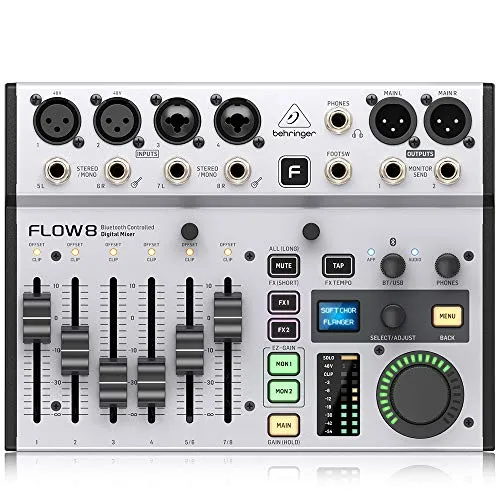
Behringer FLOW 8
Digital streaming mixer with app control, scene recall, and USB audio connectivity.
On paper the Behringer FLOW 8 takes bluetooth (Yes) and USB audio channels (10, +8). It gives up sample rate and XLR inputs to the Yamaha MG16XU 16-Channel Mixer. It is the cheaper of the two, by $475.99.
Leads on
-
BluetoothYesNo
Bluetooth brings phone call-ins and music into the mix wirelessly.
-
USB Audio Channels +8102
More USB channels let your computer receive each source separately instead of one stereo mix.
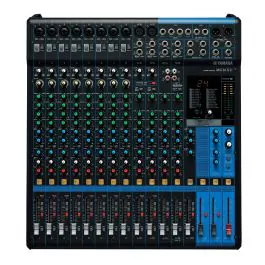
Yamaha MG16XU 16-Channel Mixer
Creator mixer built to manage microphones, monitoring, and multi-source audio control for streaming or production.
On paper the Yamaha MG16XU 16-Channel Mixer takes sample rate (24-bit/192kHz), XLR inputs (10, +6) and aux sends (4, +2). It gives up bluetooth and USB audio channels to the Behringer FLOW 8. That costs $475.99 more than the Behringer FLOW 8.
Leads on
-
Sample Rate24-bit/192kHz48kHz
Higher sample rate processing preserves audio fidelity through the mixer.
-
XLR Inputs +6104
More XLR inputs mean you can connect more microphones at once.
-
Aux Sends +242
Aux sends create separate mixes — one for your headphones, another for a guest or the stream.
Where they’re identical
These 4 specs are the same on both of them, so none of it is part of the decision.
- Bit Depth 24-bit
- Phantom Power Yes
- Onboard Effects Yes
- Records to SD Card No
The Record
22 specs, grouped by area
A group is won by whoever takes more of its rows outright. Specs the catalog cannot rank are shown but never decide a group.
Bottom Line
Who each one is for
The Behringer FLOW 8 is the pick on the specs the catalog holds, but “better on paper” and “right for you” are different questions. Each case below names what the product is actually good at and who that suits.
Frequently Asked Questions
What is the main difference between Behringer FLOW 8 and Yamaha MG16XU 16-Channel Mixer?
The clearest difference is bluetooth, which the Behringer FLOW 8 has and the Yamaha MG16XU 16-Channel Mixer does not. Across the catalog's specification sheet the two differ on 5 specs. They match on 4 specs, including bit depth, phantom power and onboard effects. Two audio mixers from Behringer and Yamaha, each taking a different approach to channel count and routing flexibility.
Which is better for streaming, Behringer FLOW 8 or Yamaha MG16XU 16-Channel Mixer?
It is a toss-up — take the Behringer FLOW 8. Neither one leads on more of the chart than the other: the Behringer FLOW 8 takes Routing and Creator Features, the Yamaha MG16XU 16-Channel Mixer takes Audio Resolution and Channels. With the trade even, $475.99 is the tiebreaker, and the Behringer FLOW 8 is the cheaper side of it.
What do the Behringer FLOW 8 and Yamaha MG16XU 16-Channel Mixer have in common?
Both share 4 specifications in the catalog, including bit depth (24-bit), phantom power (Yes), onboard effects (Yes) and records to SD card (No). None of those is a reason to pick one over the other.
Is the Yamaha MG16XU 16-Channel Mixer worth the extra $476 over the Behringer FLOW 8?
The Yamaha MG16XU 16-Channel Mixer costs $674.99 against $199.00, a difference of $476. The premium buys sample rate (24-bit/192kHz), XLR inputs (10) and aux sends (4). Whether that is worth it depends on which of those you would actually use.